

Garage floor leveling cost in 2026: mudjacking vs foam for sunken slabs
⏱️ 11 min read · Last updated: 2026
Garage floor leveling cost in 2026 usually falls between $1,200 and $4,800 for a standard two-car slab. The right method depends on how far the concrete has sunk, how the garage is accessed, and whether the floor needs to support everyday vehicle traffic. In most cases, polyurethane foam is the better long-term fix, while mudjacking is the lower-cost option for larger voids and easier jobs.
- Garage floor leveling cost in 2026 is $3–$8/sq ft for mudjacking and $5–$12/sq ft for polyurethane foam.
- A standard two-car garage of about 400 square feet usually costs $1,200–$4,800 to level.
- Interior access surcharges typically add $200–$500 when crews must work inside the garage.
- Polyurethane foam cures in 15–30 minutes, while mudjacking slurry needs 24–72 hours before vehicle traffic.
- Void fill injection for hollow spaces under slabs costs $3–$5/sq ft as a standalone preventive service.
Garage slabs are tougher to level than driveways because crews work in a confined space and the repair must withstand parked cars. I once watched a contractor cut into a floor that looked only two inches low from the surface. Underneath? A fourteen-inch void where soil had eroded near the foundation footing. That kind of hidden damage explains why quotes vary so widely from one garage to the next.
Why is my garage floor sinking on one side?
Water is almost always the culprit. Poor drainage near the foundation footing washes away the compacted subbase under one edge of the slab. That side loses support. The other side stays put. Result: a tilt.
Other causes exist — poor original compaction, tree roots, a hidden plumbing leak. But in roughly eight out of ten cases I’ve seen, uneven drainage is the root cause. And here’s the kicker: if you fix the slab but ignore the water, you’ll be writing another check in three to five years.
Before approving any repair, ask your contractor point-blank: “Are you evaluating the drainage too?” A good one will. Even if the answer is a simple gutter extension. For more on what goes wrong with concrete, see our guide on common concrete problems.
How much does garage floor leveling cost in 2026?
For a typical two-car garage—about 400 square feet—expect to pay $1,200 to $4,800. The final tally hinges on three things: the method you pick, how easy the space is to access, and how far the slab has actually sunk.
Mudjacking (also called slab jacking) runs $3 to $8 per square foot. The slurry itself is cheap; labor and gear make up most of the invoice. Polyurethane foam costs more: $5 to $12 per square foot. But that higher material price gets offset by faster curing and smaller equipment.
A shallow settlement costs less than a deeper lift because it takes fewer holes and less material to restore the slab. If a contractor prices the job from a quick glance alone, push back. Ask for a written breakdown. That’s where surprise costs hide.
Curious how garage pricing stacks up against driveways or patios? The latest concrete leveling cost statistics break down per-square-foot pricing by slab type and region.
The indoor access problem most cost guides ignore
Garage interiors cramp your style. And your equipment. Full-size mudjacking rigs and foam trucks are built for outdoor work. When the problem is in the middle of the garage floor, crews often switch to smaller portable systems.
That switch adds $200 to $500. The surcharge covers mini-pumps, extra setup time, and longer hoses snaking from an exterior truck through your garage door.
Prep affects your wallet, too. Clear everything out before the crew shows up: cars, tools, boxes. Budget at least two hours for that chore yourself. And ask upfront if the contractor charges extra for moving heavy items. Some do.
One detail often overlooked: some garage slabs have thickened edges near the door threshold. Those edges can be four to six inches deeper than the rest of the slab. That changes both the timeline and the cost.
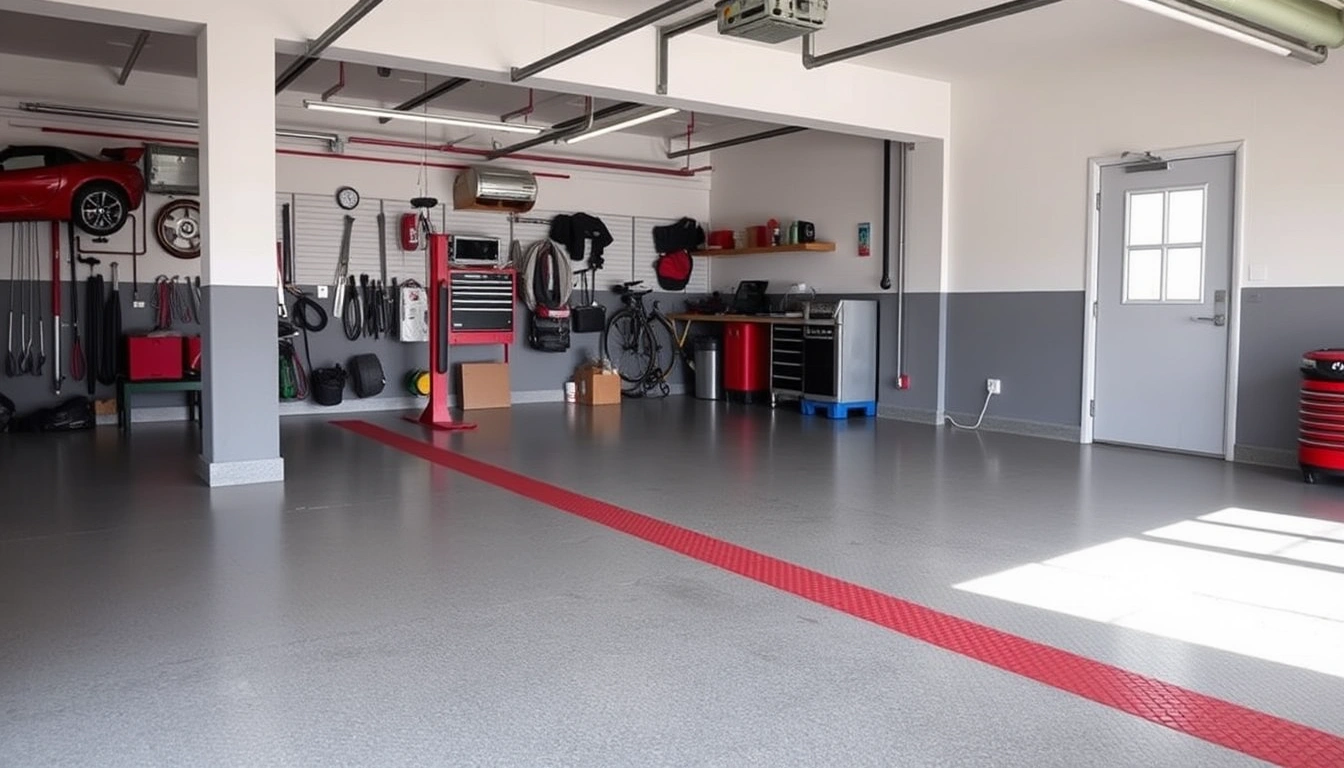
Why vehicle load changes the method you should choose
Your garage slab holds cars. That’s 5,000 to 10,000 pounds or more, depending on whether it’s a sedan, an SUV, or a full-size truck parked there daily. That constant load dictates what goes underneath.
Standard mudjacking slurry cures to about 1,000–1,500 PSI. Enough for normal residential use. Polyurethane foam hits 2,000–3,000+ PSI. It’s stronger under repeated weight.
Park a heavy truck in the same spot every day? Foam holds up better over the long haul. Mudjacking can handle the weight, sure. But if the subgrade shifts again, it’s more likely to re-settle — because you’re adding load to soil that already failed once. That makes the repair choice easier for long-term parking.
The American Concrete Institute notes garage floors require higher load ratings than interior residential floors. Because of that concentrated vehicle weight. That structural fact affects what repair makes engineering sense. For a deeper dive, review our article on load-bearing concrete repairs.
Mudjacking for garage floors: honest strengths and real limits
Choose mudjacking when your top priority is the lowest upfront cost and you have solid exterior access. It’s also practical for large voids caused by gradual compaction — not active erosion.
Strengths: Materials are readily available, so most concrete repair companies offer it. For slabs that settled slowly due to soil compaction, results can last a decade or longer. If the garage dropped because the builder skimped on compacting the fill, mudjacking fills those bigger voids without breaking the bank.
Limits: The slurry weighs about 100 pounds per cubic foot. That adds significant load to already shaky soil. Holes are two to three inches in diameter — so the slab needs more patching afterward. And if the concrete is badly cracked into pieces, lifting one section can just create new cracks in another.
Bottom line: mudjacking works best when the concrete itself is still structurally sound. Ask your contractor to check slab integrity before you commit.
Polyurethane foam: where the premium actually pays off
For many homeowners, polyurethane foam is worth the extra cost. It cures fast, adds almost no weight to the soil, and works beautifully in tight garage interiors. In 2026, it’s the better choice for most residential garage slabs.
The foam arrives as two liquids. They react and expand underground, filling voids and lifting the slab simultaneously. A technician injects through holes as small as a quarter-inch. They can control the lift with real precision — sometimes raising a slab by a fraction of an inch.
That precision counts in a garage. The floor needs to meet the driveway at the right height so the door seals properly. Foam cures in 15 to 30 minutes. You can park on it the same day. Mudjacking slurry? Wait 24 to 72 hours.
Want pricing broken down by method? This breakdown of polyurethane concrete leveling cost explains where the premium comes from — and when it’s justified.
At $5 to $12 per square foot, foam runs 40% to 100% more than mudjacking for the same area. The premium often pays for itself if you plan to stay in the house, need same-day garage access, or park heavy vehicles regularly.
Side-by-side: mudjacking vs foam for garage slabs
This comparison focuses only on garage floors, where access, cure time, and vehicle load matter far more than on a sidewalk or patio. Line them up, and the differences are stark.
| Criteria | Mudjacking | Polyurethane foam | Winner for garage slabs |
|---|---|---|---|
| Cost per sq ft | $3–$8 | $5–$12 | Mudjacking (budget) |
| Typical 400 sq ft garage total | $1,200–$3,200 | $2,000–$4,800 | Mudjacking (budget) |
| Interior access surcharge | $300–$500 | $200–$400 | Foam (smaller rig) |
| Cure time before vehicle traffic | 24–72 hours | 15–30 minutes | Foam |
| Injection hole diameter | 2–3 inches | ¼–½ inch | Foam |
| Compressive strength (PSI) | 1,000–1,500 | 2,000–3,000+ | Foam |
| Added weight to subgrade | High (~100 lbs/cu ft) | Low (~2–5 lbs/cu ft) | Foam |
| Lift precision | ±½ inch typical | ±⅛ inch typical | Foam |
| Best for heavy truck storage | Adequate | Superior | Foam |
| Typical lifespan | 10–15 years | 15–25+ years | Foam |
Foam usually costs less to access inside the garage because the rig is more compact. That can trim the access premium by $100 to $200 on a standard two-car garage.
Planning to stay five or more years? Foam’s longer lifespan and faster cure time usually justify the higher upfront cost. Selling soon and just need the slab level for inspection? Mudjacking gets it done cheaper. For comparison, sidewalk leveling cost follows a different pricing structure because exterior access is rarely an issue.
Three situations where the usual verdict flips
Foam is the better garage repair most of the time. But not always. Here are three scenarios where the lower-cost method actually makes more sense. These are the cases where your garage floor leveling cost decision should flip.
First, large voids with good exterior access. Settled because of a major void underneath, and the crew can reach it through the garage door or an exterior wall? Mudjacking fills that space much cheaper. A void needing 40 or 50 pounds of foam could cost far more than a slurry fill.
Second, cosmetic-only issues that do not affect vehicle clearance. Floor slightly uneven but not cracked, not causing door problems, not a tripping hazard? A self-leveling compound on top may improve the surface appearance without a full slab lift.
Third, properties with a short holding period. If you plan to sell or rent soon, the lower upfront cost of mudjacking often makes more sense than paying for foam’s longer service life.
Common questions about garage floor leveling cost
What causes a garage floor to sink and how is it leveled?
Poor drainage near the foundation footing causes most garage floor sinking. Water erodes the subbase under one side of the slab, creating voids. Leveling involves drilling holes through the concrete and injecting mudjacking slurry or polyurethane foam to fill those voids and lift the slab back to its original position.
How to prepare a garage for concrete leveling?
Clear all vehicles, tools, and stored items from the affected area at least two hours before the crew arrives. Take photos of the space and send them to the contractor beforehand so they can plan equipment access. Check that the garage door opens fully and confirm parking arrangements for the cure period.
Foam vs mudjacking for a garage floor — which is better?
For most residential garage slabs in 2026, polyurethane foam is the better choice because it cures in 15–30 minutes, uses smaller injection holes, and has higher compressive strength. Mudjacking is still better for large voids on a tight budget when exterior access is easy and the slab will not carry heavy trucks daily.
Why does my garage floor keep cracking after leveling?
New cracking after leveling usually means the drainage or soil problem was not fixed. Water keeps eroding the subbase and creates new voids that stress the slab. In some cases, the slab was too thin or poorly reinforced to handle the original settlement forces, and leveling exposed weak points that were already there.
How much does garage floor leveling cost in 2026?
Garage floor leveling cost in 2026 ranges from $1,200 to $4,800 for a standard two-car garage of about 400 square feet. Mudjacking runs $3–$8 per square foot, while polyurethane foam runs $5–$12 per square foot. Interior access surcharges typically add $200–$500 when crews must work inside the garage.
Can you mudjack a garage floor with the cars still parked nearby?
Vehicles should be moved out of the garage entirely during the work. Mudjacking equipment is heavy and requires clear access to the slab surface being lifted. Foam rigs are more compact, but vehicles still need to be removed for safety and for a full slab inspection.
Is garage floor leveling a DIY job or do I need a contractor?
Garage floor leveling is not a DIY job in most cases. The required equipment is specialized and expensive, and improper leveling can cause cracking, uneven surfaces, or wasted material. Hiring a licensed contractor with slab experience is strongly recommended for any settlement over one inch.
- Garage floor leveling cost in 2026 ranges from $3–$8/sq ft for mudjacking to $5–$12/sq ft for polyurethane foam, with a standard two-car garage totaling $1,200–$4,800.
- Interior access constraints typically add $200–$500 because crews need smaller, portable equipment inside the garage.
- Polyurethane foam cures in 15–30 minutes and lasts 15–25 years; mudjacking takes 24–72 hours and lasts 10–15 years.
- Address the drainage problem causing settlement before leveling, or the repair may not last.
The bottom line
Your garage floor leveling cost should match the slab’s cause of failure, your access limits, and how long you want the fix to hold. For most residential garages in 2026, polyurethane foam is the smarter investment. It cures faster, weighs less, and lasts longer.
Choose mudjacking if you’re watching every dollar, have large voids with easy exterior access, or need a short-term fix before selling. Choose foam if you plan to stay, park heavy vehicles, or need same-day garage access after the repair.
Neither method works if the slab is badly cracked into multiple pieces. In that case, you may need full slab replacement. A structural evaluation should come first. For more on that scenario, read about slab replacement vs repair.
Your next step is simple. Close the garage door. Look for daylight peeking under one side but not the other. That gap means measurable settlement. Time to get two or three quotes. For the full picture on pricing across all slab types, start with our guide to mudjacking cost in 2026.
See also: mudjacking cost
See also: concrete leveling cost statistics
See also: polyurethane concrete leveling cost
Related: commercial concrete leveling cost
Related: concrete leveling cost calculator
See also: mudjacking cost
See also: mudjacking contractors
See also: polyurethane concrete leveling cost


